Listen
Family memories and local knowledge give a tree a history worth following.
THE HERITAGE APPLE PROJECT · NEW YORK
That tree just beyond the stone wall. The really old one beside the barn. The apple your grandparents called by a name no one else remembers. Help us find these trees—and the stories—that time is leaving behind.
A FLAVOR CAN BE A TIME MACHINE
You picked it warm from the sun. Maybe it was striped, knobby, or impossibly crisp. Maybe it was sweet enough to stop you in your tracks or so tart you can still feel it in your cheekbones. For one perfect minute, the whole world was an old tree, some tall grass, and the apple in your hand.
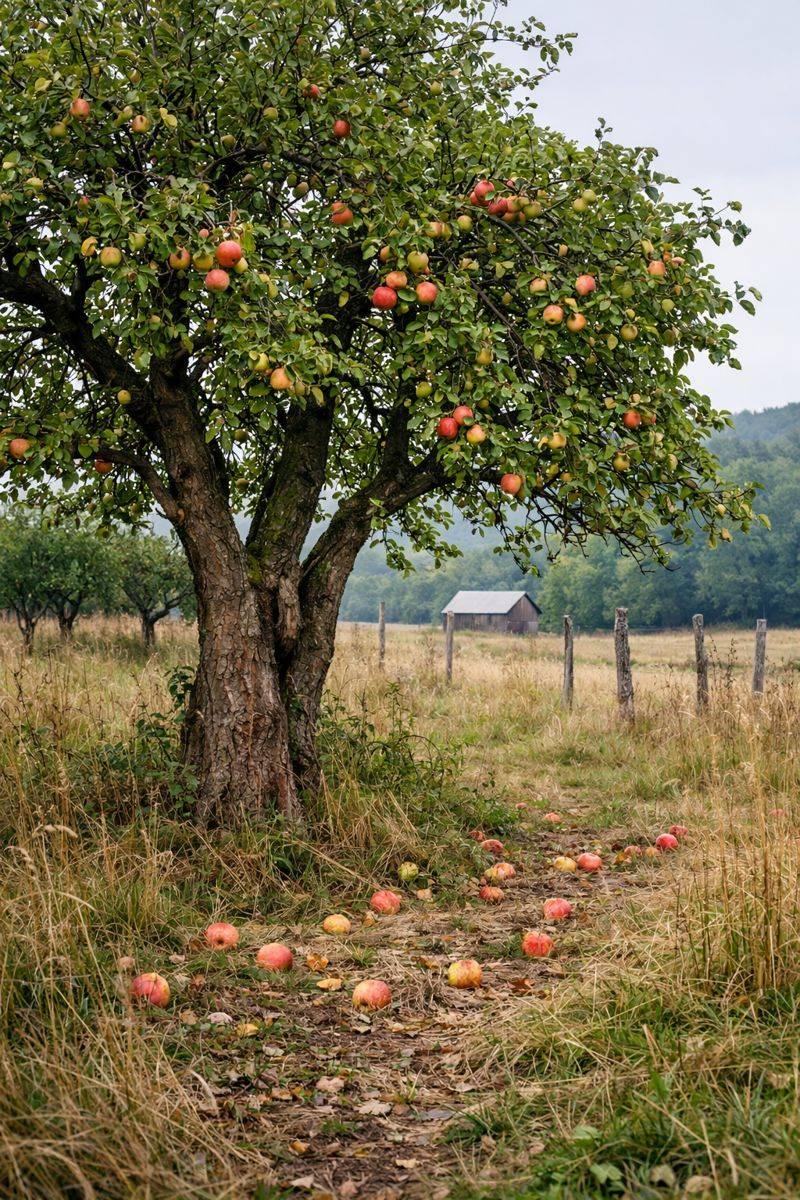
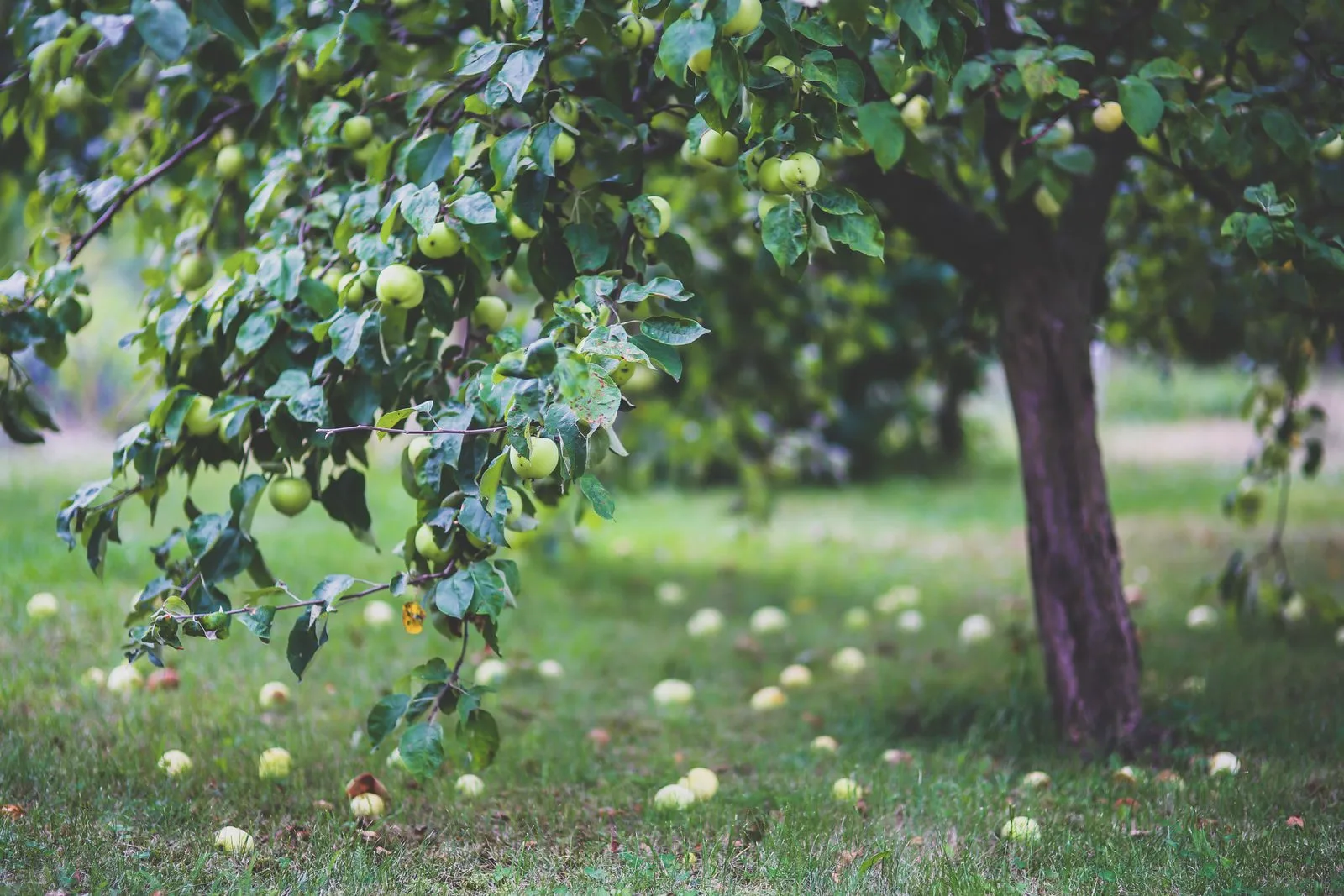
Across New York, trees like that still survive in forgotten orchard rows, along field edges, beside cellar holes, and in the yards of families who have quietly cared for them for generations. Some may be rare named varieties. Others may be seedlings found nowhere else on earth.
When one disappears, we can lose more than fruit. We can lose a family memory, a piece of local history, and a unique living inheritance.
FROM A MEMORY TO A MISSION
The Heritage Apple Project is an effort to gather those stories, catalog the trees connected to them, and—when a tree is especially promising and permission allows—preserve its living genetics for orchardists, researchers, and future generations of kids.
The project is led by Plantaera Biotech, a small plant science and propagation lab in Rensselaer County, New York. We bring community knowledge, historical research, careful field records, and plant tissue culture together in the hope that remarkable apples will not disappear unnoticed.
You do not need to be a pomologist or know a variety's name to take part. We encourage everyone to notice old trees, ask questions, share the stories they know, and inspire others to look more closely at the living history around them.
Family memories and local knowledge give a tree a history worth following.
A promising lead can become a traceable catalog entry instead of a story that vanishes.
Selected trees may become part of a living collection whose identity and story remain connected.
Every report matters, but preservation has limits. Not every reported tree can be visited, DNA tested, or brought into culture. A report begins a record—not a promise of sampling—and helps us make thoughtful choices about where limited time and resources can do the most good.
See what to look forWHAT MIGHT BE WAITING NEAR YOU?
Old apples often persist where no one thinks to look. You do not need to know the variety. You only need curiosity—and a reason to wonder.
A broad, weathered trunk; hollow limbs; a tree that seems older than everything around it.
Odd shape, unexpected color, remarkable flavor, late ripening, long keeping, or an apple unlike modern store fruit.
A family name, local nickname, old recipe, cider tradition, or story about where the tree came from.
An old farmstead, abandoned orchard, stone wall, cellar hole, hedgerow, or barnyard edge.
Please explore respectfully. Never enter private land, pick fruit, or take cuttings without the owner's permission. A roadside glimpse or remembered story is enough to begin.
FROM FIELD NOTES TO LIVING MATERIAL
Preservation begins with a record, not a test tube. The tree, its fruit, its place, its owner, and the story attached to it must remain connected as material moves from the field into the lab.
With permission, we record the date and GPS coordinates; photograph the tree and site; measure the trunk and estimate height; note health and growing conditions; and document the fruit outside, through the poles, and across the equator. Flavor, texture, ripening time, remembered uses, names, and family history all become part of the record.
If the tree is selected and the owner separately approves collection, we return while it is dormant. Carefully labeled scions create a traceable bridge between the mother tree, laboratory material, later plants, and every observation attached to them.
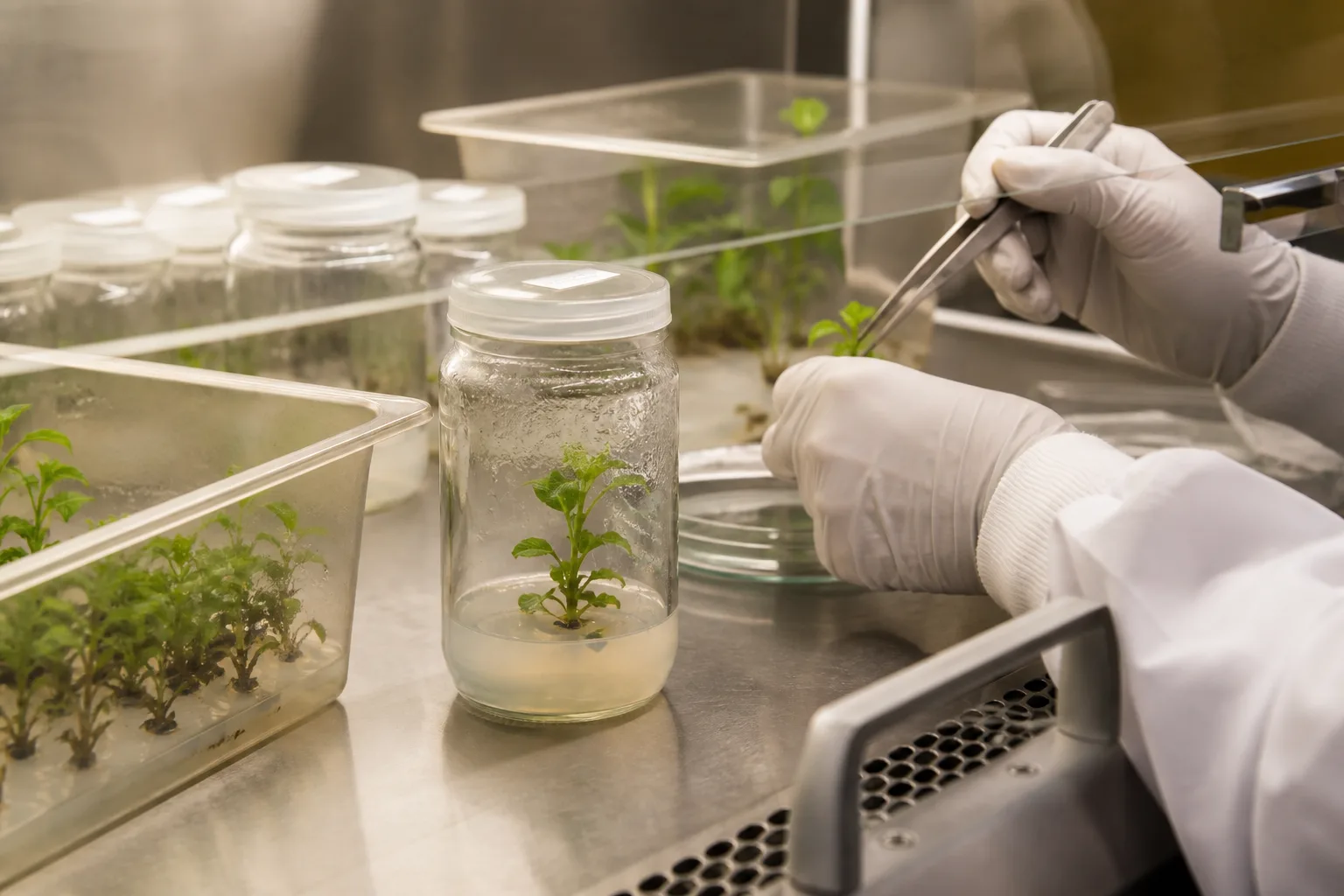
Buds may be encouraged to open under controlled conditions before tiny shoot tips or meristems are excised and placed on sterile nutrient media. Surviving cultures are observed, cleaned of contamination, stabilized, and multiplied slowly. Some genotypes establish readily; others fail despite repeated attempts.
Fruit characters, historical sources, and known collections may suggest an identity. Selected trees may receive DNA fingerprinting when the likely value justifies the cost. A reference match can support identification, but a missing or ambiguous match does not make a tree unimportant.
Stable cultures can provide compact clonal backups and material for multiplication, research, rooting, acclimation, and eventual return to orchards. The goal is not merely to store genetics, but to keep exceptional apples alive, traceable, and useful.
New material retains the selected tree's genotype instead of creating a genetically different seedling.
Once a culture is stable, a small amount of starting material can produce many traceable shoots without repeatedly cutting the mother tree.
Repeated in-vitro culture can restore juvenile-like propagation behavior in apple shoots, sometimes improving multiplication and rooting. It does not change the cultivar's identity or literally make the old mother tree young again.
Small meristem culture, sometimes combined with additional treatments, can eliminate certain viruses and other graft-transmissible pathogens. Tissue culture alone does not guarantee “disease-free” material; that claim requires appropriate testing.
Documented cultures can support comparison, pathogen testing, propagation trials, and future work that may not be possible from one declining field tree.
Living material can eventually be maintained in the lab and in multiple orchards, reducing the risk that one storm, disease event, or property change erases it.
HELP THE WORK TAKE ROOT
Contributions help cover field documentation, sterile media and vessels, greenhouse care, DNA testing, and the long work of maintaining cultures while this young project grows toward sustainability.
The Heritage Apple Project is operated by Plantaera Biotech, a for-profit company. Financial support is not a tax-deductible charitable donation and does not purchase an ownership interest in any tree, culture, or future product.
THE PEOPLE ARE PART OF THE PRESERVATION
Tell us what the apples were good for. Fresh eating? Pies? Sauce? Cider? Did they keep in the cellar until winter? Did children climb the branches? Was there a family recipe, a local name, or someone who always knew exactly when to pick them?
Those details may never appear in a book or database. They live with people—and they are as important to this project as measurements, photographs, or laboratory results.
Share what you rememberJOIN THE HUNT
We are beginning in Rensselaer County and welcome promising leads from anywhere in New York. A complete history is wonderful, but it is not required. Tell us what caught your attention and what you know so far.
START A CONVERSATION
Reach out about research collaboration, orchard partnerships, historical records, project sponsorship, media inquiries, or any other way you would like to help this work grow.
Sage.Monast@plantaerabiotech.comFor a specific tree lead, the report form is still the best place to begin because it sends the details directly into the private review workflow.
Report a treeThere are apples still growing whose names have been forgotten.Report a heritage apple tree
Let’s find them before the trees are gone.