PATH 01 · COMMUNITY-LED DISCOVERY
You bring a story to us
Owners, families, neighbors, historians, and community members can share an old or interesting New York apple tree—even if the variety is unknown.
What to share with us Heritage Apple Project
HOW IT WORKS
Trees enter the Heritage Apple Project in two ways: someone shares a story with us, or we find a promising tree and contact its owner. From there, we document, evaluate, and—when warranted—preserve the apple for the future.
Not every story leads to a preserved apple, and it does not need to. The story itself is an important part of New York’s apple history.
Share a Tree Story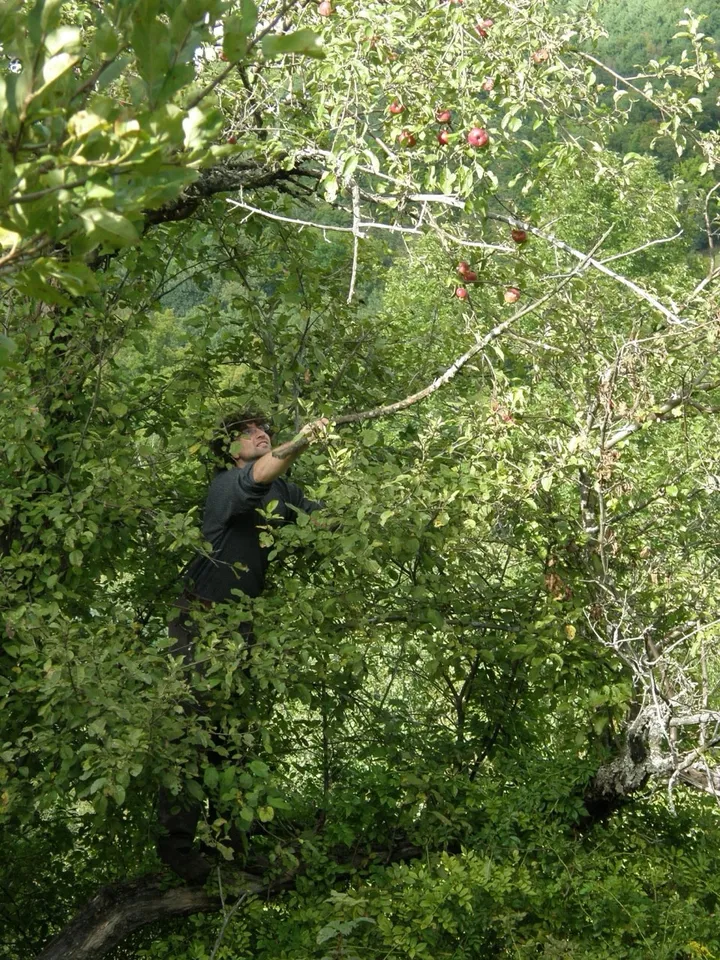
TWO WAYS TO BEGIN
The project combines community knowledge with active field discovery. Both routes lead to the same careful process of permission, documentation, and evaluation.
PATH 01 · COMMUNITY-LED DISCOVERY
Owners, families, neighbors, historians, and community members can share an old or interesting New York apple tree—even if the variety is unknown.
What to share with usPATH 02 · PROJECT-LED DISCOVERY
The Heritage Apple Project actively searches roadsides, old farms, orchards, and historic properties, then contacts the owner or steward to invite participation.
One shared process. Owner contact and permission come first.
THE PROCESS AT A GLANCE
Through a public submission or project-led search.
Story, setting, tree, fruit, photographs, and measurements.
Comparison, historical research, and testing when justified.
Scion (stem cutting) collection, propagation, or sterile culture.
Successful varieties may eventually become available for sale.
WHAT HAPPENS NEXT
Every submission is reviewed privately. Publication, field study, testing, collection, and preservation are separate decisions. We contact the owner or steward before visiting; a submission does not authorize access or collection.
The owner or steward can approve, limit, postpone, decline, or stop participation. Collecting fruit, scion wood, or other living material requires specific permission.
Only separately approved stories, photographs, and permitted location details become a public record. Private contact details and original submissions stay protected.
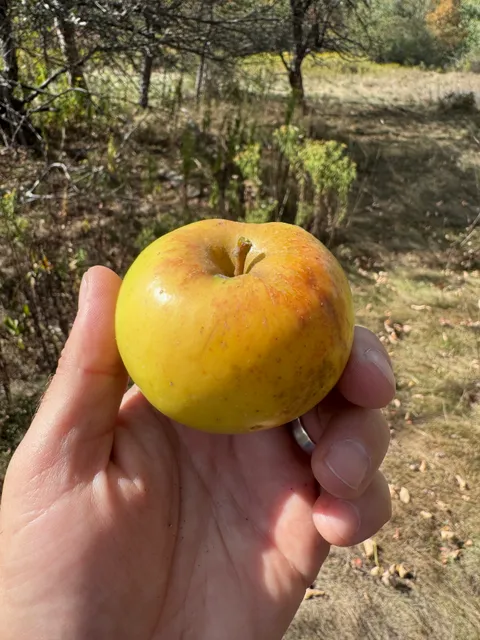
At the right season, we record the tree, its setting, mature fruit, remembered history, and repeatable measurements. Some trees require return visits.
Observed traits are compared with historical sources and known collections. DNA or other testing may be used when the expected value justifies the cost.
Identification follows the evidence; “unknown” can be the correct conclusion. An absent DNA match does not prove uniqueness.
Rare, unique, or historically significant apples may be selected for propagation or tissue culture—growing shoots on sterile medium. Some attempts fail; careful records remain.
Cooperating owners or stewards should receive a copy of the completed project record. If project testing is performed, they should receive the results with an explanation of the limitations, including an inconclusive finding.
If healthy plants are successfully rooted and acclimated to life outside the laboratory, we intend to offer the cooperating steward a young tree when one becomes available. Selection, testing, successful propagation, and plant availability cannot be guaranteed.
Read the participation terms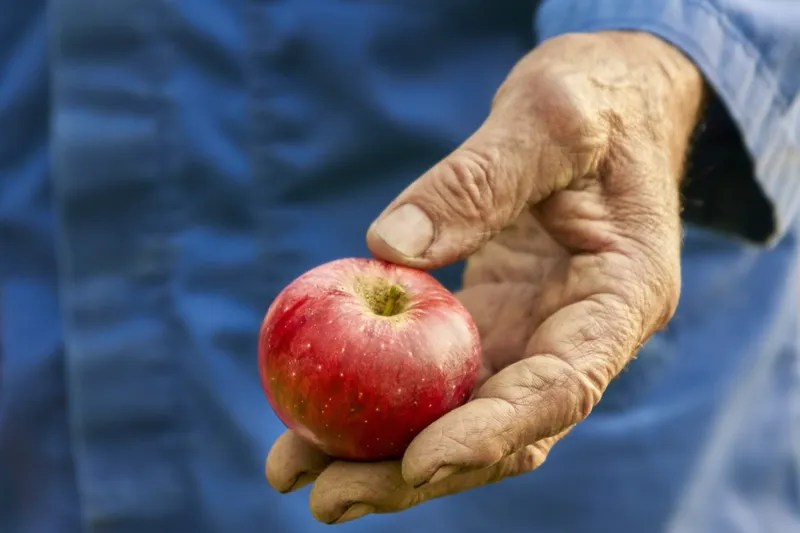
IN THE FIELD
A mature-fruit visit connects a story to repeatable evidence. The exact work depends on the tree and the season.
FOR SELECTED APPLES
When an apple is selected and the owner gives specific permission, dormant material may be collected and brought into a traceable preservation program.
A living accession is preserved plant material kept under a unique record, connected to its source tree and collection history.
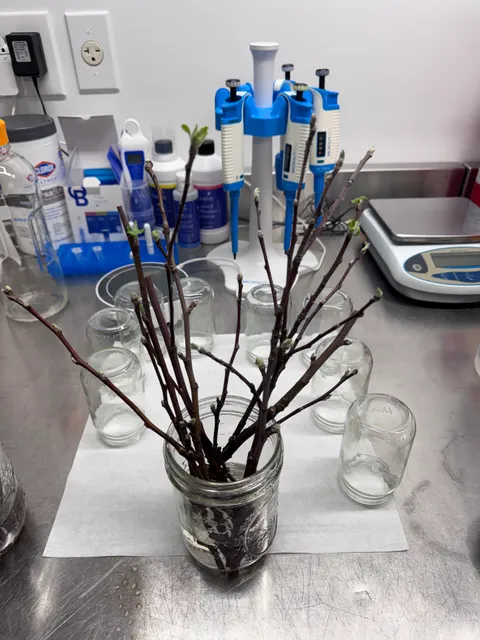
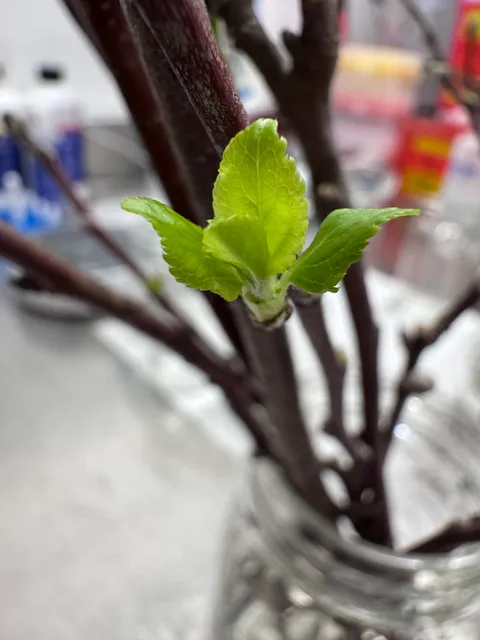
Scion: a piece of stem used to propagate the source apple.
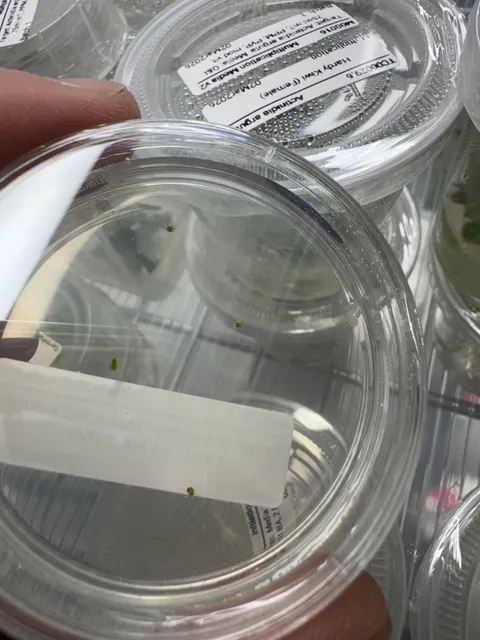
Meristems are tiny growing tips, established on sterile nutrient medium.
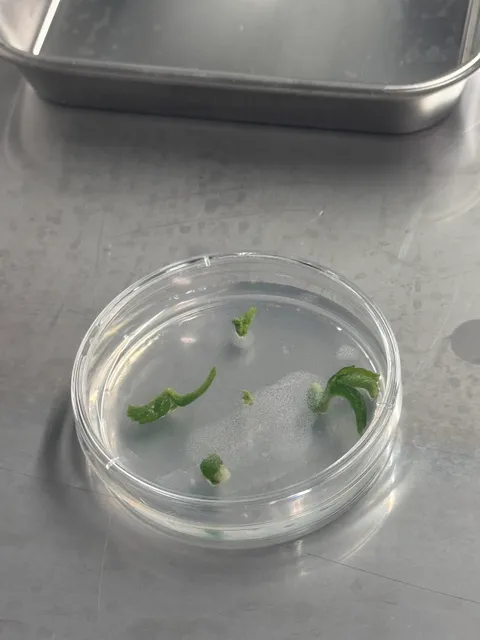
Shown: young plants in culture, before the transition to soil.
Tissue culture is one preservation route; grafting may also be used. Successful shoots must root and gradually adjust to conditions outside the culture vessel. Sterile culture alone does not guarantee disease-free plants; plant health requires appropriate evaluation and testing.
VALID OUTCOMES
A family memory, local history, photographs, or an old tree’s existence becomes part of the public archive.
Field evidence and research may identify a known variety—or honestly conclude that its identity remains unknown.
Selected genetics become a living accession, with the long-term goal of return to orchards and public availability.
A tree does not have to be selected for biological preservation for its record to matter.
TIMING
This is rarely a one-visit process. Complete documentation and preservation may extend across seasons or years.
THE LONG VIEW
Successful varieties may eventually be propagated and offered for sale. Revenue helps support continued fieldwork, research, preservation, and expansion of the living collection.